October 2026 • 8 min read
Santa Maria is the southernmost and oldest of the nine Azores islands, part of Portugal, 100 km south of São Miguel in the mid-Atlantic. It is 97 km² with about 5,400 people, and it is known for being the first island the Portuguese settled (1432), for the place where Columbus landed on his way home in 1493, for the sunniest, driest climate in the archipelago and its pale sand beach, for an airport that was once the refuelling stop for every transatlantic flight, and for whitewashed houses with cylindrical chimneys that look more like the Algarve than the Azores.
This guide covers the island's history from settlement to the jet age and the living culture you will meet there: festivals, houses, pottery, food and wine. For the sights and a day-by-day plan, see our Santa Maria itinerary and what-to-visit pages.
Where Santa Maria Is, and Which Santa Maria This Is
There are several places called Santa Maria, which is why this island is usually written "Santa Maria, Azores" or "Santa Maria Island, Portugal". It belongs to the Autonomous Region of the Azores, a Portuguese archipelago roughly 1,400 km west of Lisbon, and sits in the eastern group with São Miguel, 25 minutes away by air. The capital is Vila do Porto, the currency is the euro, the language is Portuguese, and the time zone is one hour behind Lisbon.
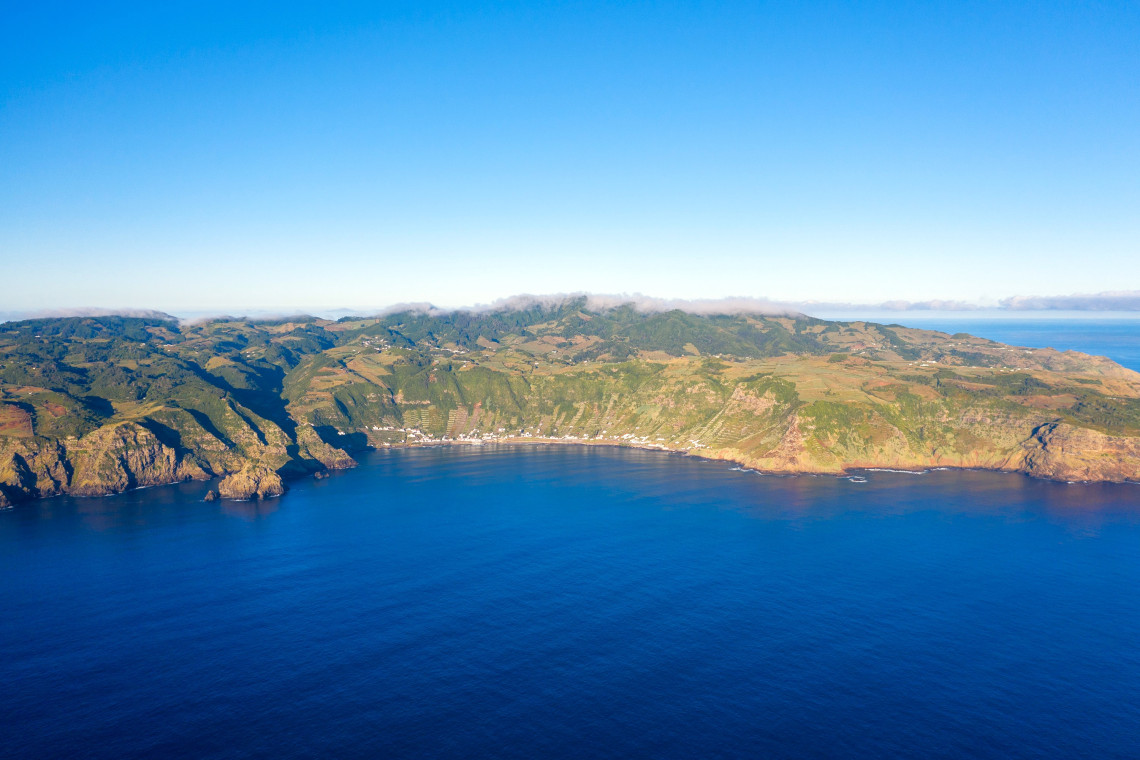
Geologically it is the senior island: around 8 million years old, no longer volcanically active, worn into low hills (the summit, Pico Alto, is only 587 m) and the only island in the Azores with marine fossils, at Pedreira do Campo and the Figueiral, proof that it has been under the sea and risen again. The lower profile is why the clouds that sit on the other islands often pass over Santa Maria, giving it around 2,000 hours of sun a year and the nickname "ilha do sol".
1432 to 1493: The First Island
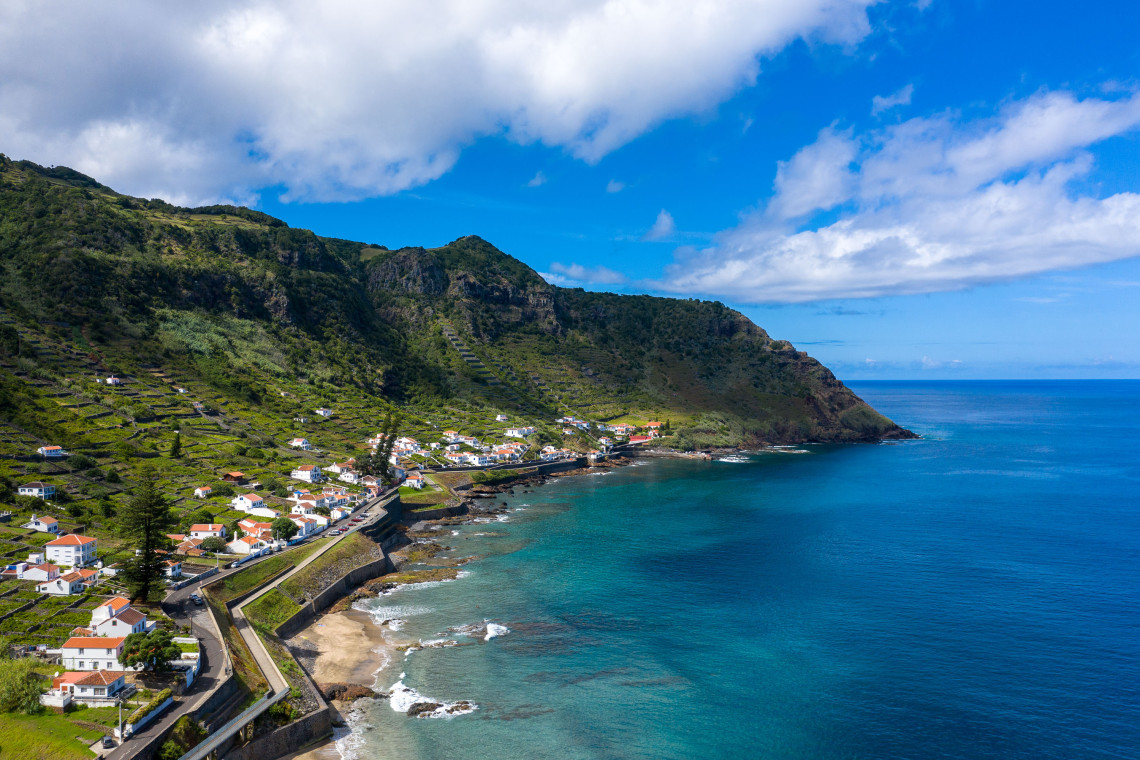
Santa Maria was the first of the Azores to be found and the first to be settled. Portuguese chronicles credit Gonçalo Velho Cabral, a navigator in the service of Prince Henry, with the discovery in 1432, on 15 August according to tradition, the feast of the Assumption of the Virgin, which gave the island its name and its parish church its dedication. Settlement began around 1439 under Gonçalo Velho as the first Captain-Donatário, with families from the Algarve and Alentejo in the south of Portugal, which is why the houses, the chimneys and even the accent of Santa Maria differ from the rest of the archipelago, settled later largely from northern Portugal and Flanders.
The settlers grew wheat, raised cattle and extracted woad and urzela dyes for export. Vila do Porto grew up on a ridge above the only sheltered anchorage, and its parish church of Nossa Senhora da Assunção, begun in the 15th century, is among the oldest in the Azores.
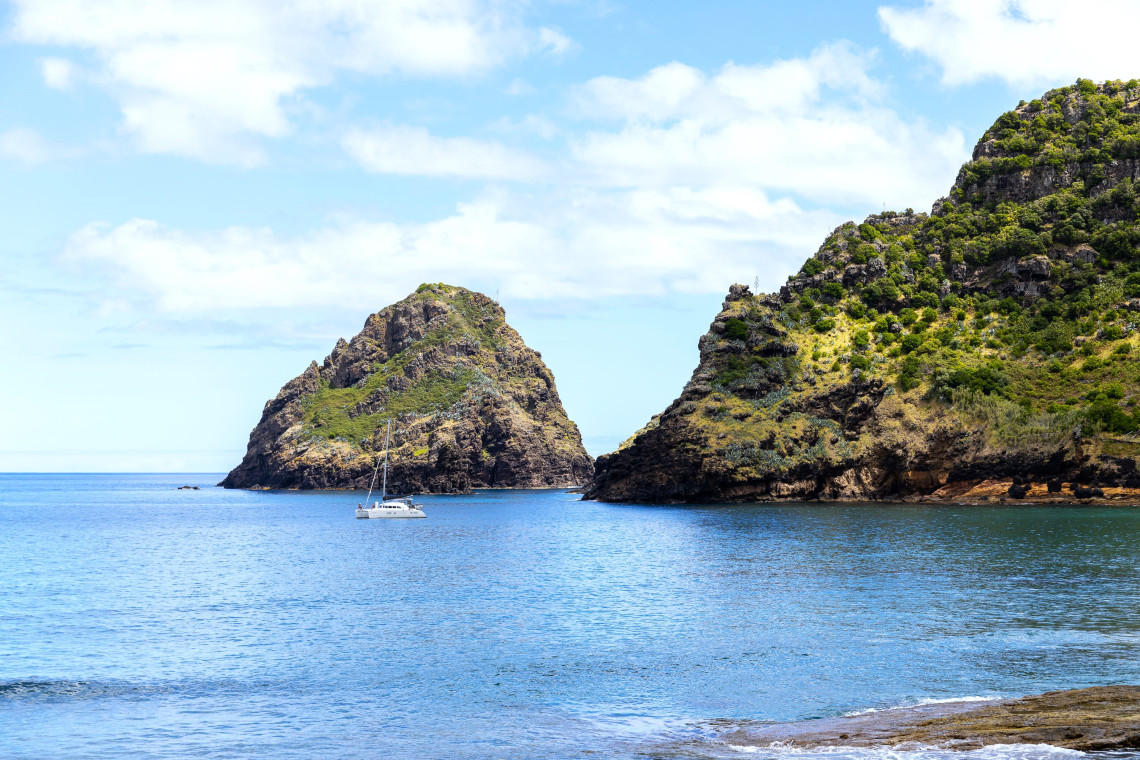
In February 1493 Christopher Columbus, returning from his first voyage to the Americas, was blown towards the Azores and anchored at Anjos on the north coast. The islanders, used to pirates, arrested part of his crew when they went ashore to hear mass in the small chapel in thanks for surviving the crossing; after a tense few days they were released and Columbus sailed on to Lisbon. The chapel, rebuilt over the centuries, still stands beside the natural pools at Anjos, with a statue of Columbus in front of it.
Pirates, Privateers and Forts
For the next two centuries the sea that brought trade brought raiders. Santa Maria, small and on the route from the Americas and Africa, was attacked repeatedly: by French privateers in the 16th century, by English ships during the wars with Spain (which ruled Portugal from 1580 to 1640), and by Barbary corsairs from North Africa, whose raids of 1616 and 1675 are the ones islanders still speak of; the 1616 attack sacked Vila do Porto and carried hundreds of people into slavery.
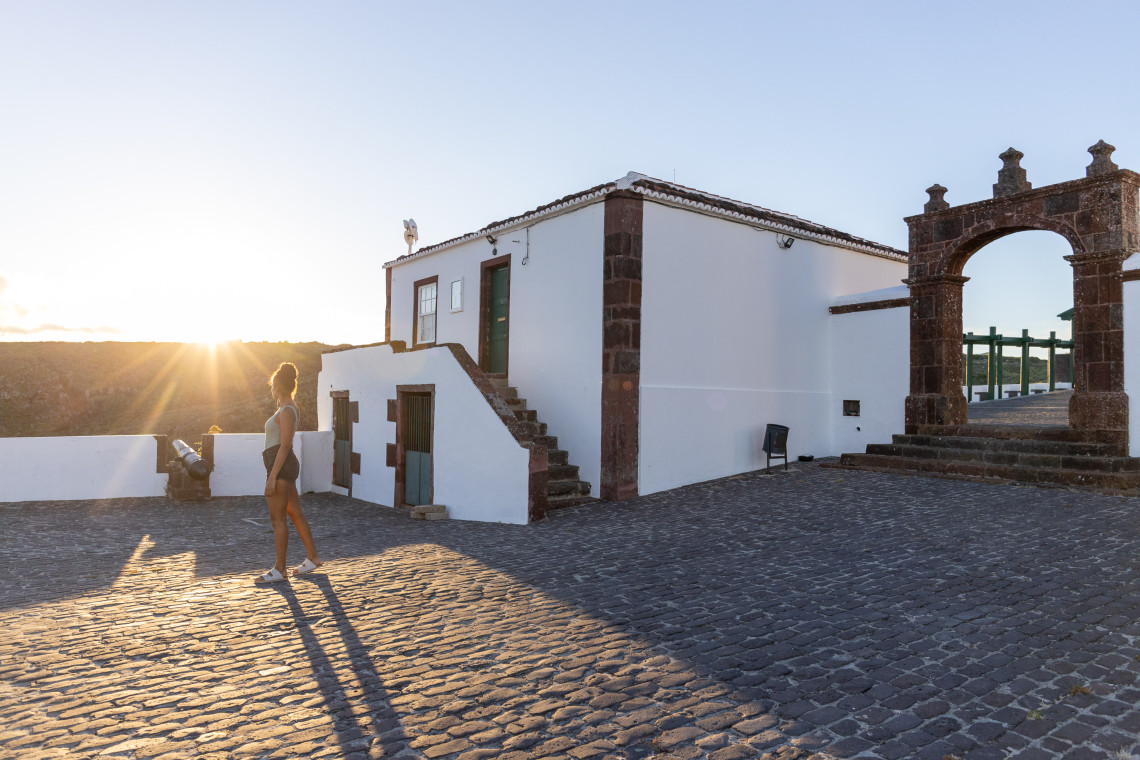
The response was stone. The Forte de São Brás was built in the 17th century on the cliff above the harbour of Vila do Porto, and smaller batteries went up along the coast at Anjos, São Lourenço and Praia Formosa, where the ruined Forte de São João Baptista still overlooks the beach. São Brás was restored in the 1960s and its cannons still point out to sea; it is the first stop on any walk through the town.
SANTA MARIA WITH A LOCAL GUIDE
Full-day island tour covering Vila do Porto, Anjos, São Lourenço, Pico Alto and the Barreiro da Faneca, with the history told by someone who grew up in it. Lunch included.
Book the full-day tour →1944: The Island That Became an Airport
Santa Maria's second founding came from the sky. In 1944, with Portugal neutral but cooperating with the Allies, American forces built a large airfield on the flat south-western plateau; the first aircraft, a C-47, landed on 8 August 1944, and the airport was handed to Portugal in 1946. For the next quarter century it was one of the busiest crossroads of the Atlantic. KLM flew the first New York connection through Santa Maria in May 1946, Pan American followed in 1947 and Air France in 1948, and in 1946 the island became the air traffic control centre for the North Atlantic, a role its oceanic control centre still performs today for flights crossing between Europe and the Americas.
Thousands of passengers a week passed through the terminal in the 1950s, the village of Aeroporto grew up around it with American-style houses and a cinema, and Santa Maria briefly had more contact with the outside world than Lisbon. Jets with longer range ended the stopover era in the 1970s, although Air France's Concorde refuelled here on its Paris to Caracas route into the 1980s. The runway, far longer than a 5,000-person island needs, and the control centre are the legacy; so is a generation of islanders who grew up speaking English with Americans.
Houses, Chimneys and Colours
The most visible cultural fingerprint is the architecture. Santa Maria's rural houses are low, whitewashed and roofed in tile, with a tall cylindrical chimney rising from a stepped or pyramidal base, a design brought by the Algarve and Alentejo settlers and found nowhere else in the Azores. Each of the five parishes traditionally painted its door and window frames in its own colour against the white walls: blue in Vila do Porto, green in Santo Espírito, red in Almagreira, yellow in São Pedro and brown in Santa Bárbara, so that an islander could tell at a glance where a house stood. Look for them on the drive between Santo Espírito and São Lourenço, where the hamlets are best preserved.
Festivals: Espírito Santo, August and the Sea
The Holy Spirit festivals (Festas do Espírito Santo), the great Azorean tradition of crowning an emperor, processing the silver crown and feeding the whole community with sopas, run on Santa Maria from Easter into summer, parish by parish, around the small chapels called impérios. Visitors are welcome at the table; accept the soup and the sweet bread.
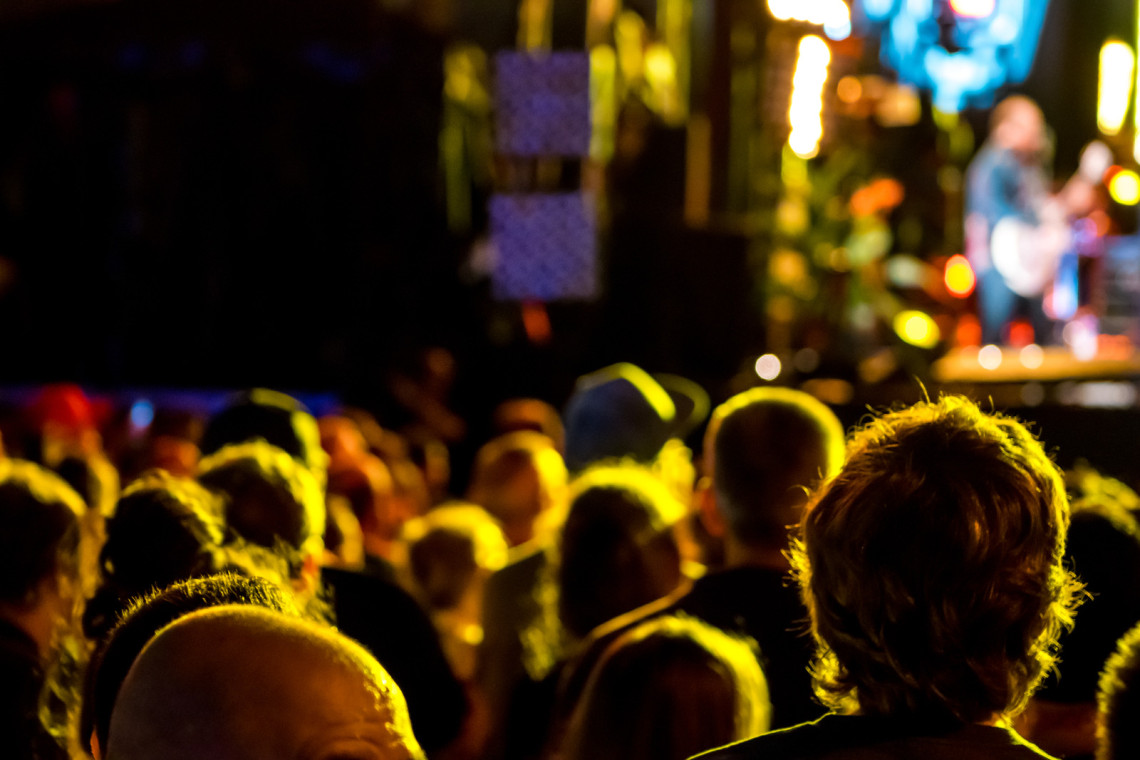
August is the island's month. The Festas de Nossa Senhora da Assunção on 15 August in Vila do Porto mark the patron saint and, by tradition, the day of discovery. The Maré de Agosto festival, held since the 1980s on the beach at Praia Formosa in the last week of August, is one of the Azores' longest-running music festivals and brings world music acts and several thousand visitors to a bay that is otherwise quiet. The Santa Maria rally, the Sacred Art celebrations and the summer regattas fill the rest of the calendar.
SANTO ESPÍRITO AND MAIA ON FOOT
Half-day guided walk through the most traditional parish, its painted hamlets and the vineyard terraces of Maia, with lunch.
Book the Santo Espírito hike →Crafts, Food and Wine
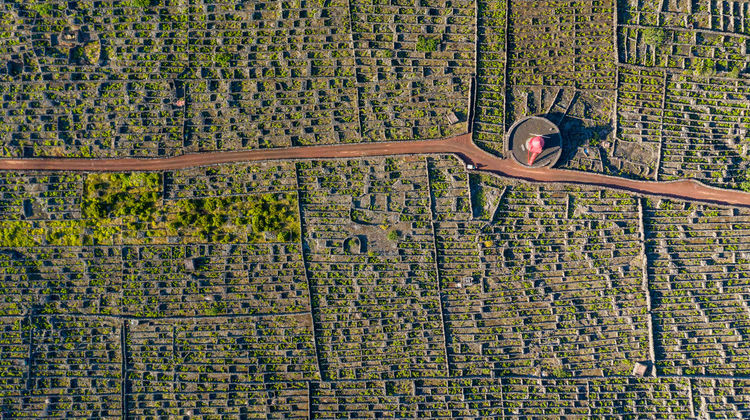
Santa Maria's clay, the same red earth that colours the Barreiro da Faneca, made it the pottery island of the Azores; the tradition is small today but the island's red-clay pots and figures are sold in Vila do Porto and Santo Espírito, alongside embroidery and woven goods. The vineyards are the other inheritance: terraced into the slopes above Maia and São Lourenço in black stone walls, they produce the aromatic "vinho de cheiro" from American hybrid vines, a sweet, perfumed local wine drunk at festivals, and increasingly dry table wines from a handful of small producers.
The food is Atlantic and simple: grilled fish and limpets, octopus stewed in wine, local beef, the "caçoila" of the August festivities, sopas do Espírito Santo in season, and sweet "biscoitos de orelha" and "suspiros" from the island's bakeries. Meals are eaten in Vila do Porto and at the bars by the water in Anjos and São Lourenço.
Why It Matters for a Visit
Most people come to Santa Maria for the sun, the beach and the diving, and leave having understood something else: that this is where the Azores began, where the Old World first heard confirmation of the New, and where the Atlantic air age had its waiting room. Three days on the island covers both the landscape and the story; our itinerary shows how to fit them together.
Plan it your way
Custom Your Trip
Tell our local travel advisors which islands, dates and experiences you want and we build the itinerary around you.
Start your custom trip →Limited time
Azores Packages On Sale
Flights, hotels and rental car bundled at reduced prices. See every package currently on sale and book while it lasts.
Book now →Santa Maria History and Culture: FAQ
What country is Santa Maria Island in?
Portugal. Santa Maria is one of the nine islands of the Azores, an autonomous region of Portugal in the North Atlantic, about 1,400 km west of Lisbon and 100 km south of São Miguel.
What is Santa Maria, Azores known for?
Being the first Azores island to be discovered and settled (1432), Columbus's landing at Anjos in 1493, the sunniest and driest climate in the archipelago, the pale sand beach of Praia Formosa, the red clay desert of Barreiro da Faneca, marine fossils, Algarve-style houses with cylindrical chimneys, the Maré de Agosto music festival, and an airport that was the transatlantic refuelling stop of the 1940s to 1960s.
Who discovered Santa Maria?
The Portuguese navigator Gonçalo Velho Cabral is credited with the discovery in 1432 and became the island's first Captain-Donatário when settlement began around 1439.
Why is the island called Santa Maria?
By tradition it was sighted on 15 August, the feast of the Assumption of the Virgin Mary, and named in her honour. The parish church of Vila do Porto is dedicated to Nossa Senhora da Assunção and the island's main festival falls on that date.
Did Christopher Columbus visit the Azores?
Yes. In February 1493, returning from his first voyage, he anchored at Anjos on Santa Maria, where part of his crew was briefly detained by islanders wary of pirates. The chapel where they heard mass still stands.
Why are the houses in Santa Maria different from the rest of the Azores?
The first settlers came from the Algarve and Alentejo in southern Portugal and brought their architecture: whitewashed houses with tall cylindrical chimneys and painted trims, each parish with its own colour.
Why is there such a big airport on Santa Maria?
American forces built it in 1944 and it became the main refuelling stop for transatlantic flights from 1946 into the 1970s, as well as the North Atlantic air traffic control centre, a role it still holds.
Is Santa Maria worth visiting for history?
Yes, especially combined with the beaches and the landscape: Vila do Porto and the Forte de São Brás, the Anjos chapel, the fossil sites and the airport story can all be seen in a day, and the parish festivals in summer are open to visitors.
.jpg "Jeep tour through Cumeeiras, Sete Cidades, São Miguel Island")
.jpg "Sete Cidades Caldera Lakes in São Miguel Island, Azores")